Filed under: A to Z of Bullions, A to Z of Embroidered Flowers, A to Z of Embroidery Stitches, Books in My Library, Embroidery Books
There are a bunch of books (at least 20) in the A to Z Series. I have 3 of them (1st, 2nd, and 5th) but there are a few of them free online at Archive.org.
https://archive.org/details/azofembroideryst0000unse (A to Z of Embroidery Stitches 2)
https://archive.org/details/azofembroideredm0000unse (A to Z of Embroidered Motifs)
https://archive.org/details/azofcrewelembroi0000sueg (A to Z of Crewel Embroidery)
https://archive.org/details/azofsilkribbonfl0000coxa (A to Z of Silk Ribbon Flowers)
And, for knitters
https://archive.org/details/azofknitting0000unse
Here are mine:
A to Z of Embroidery Stitches

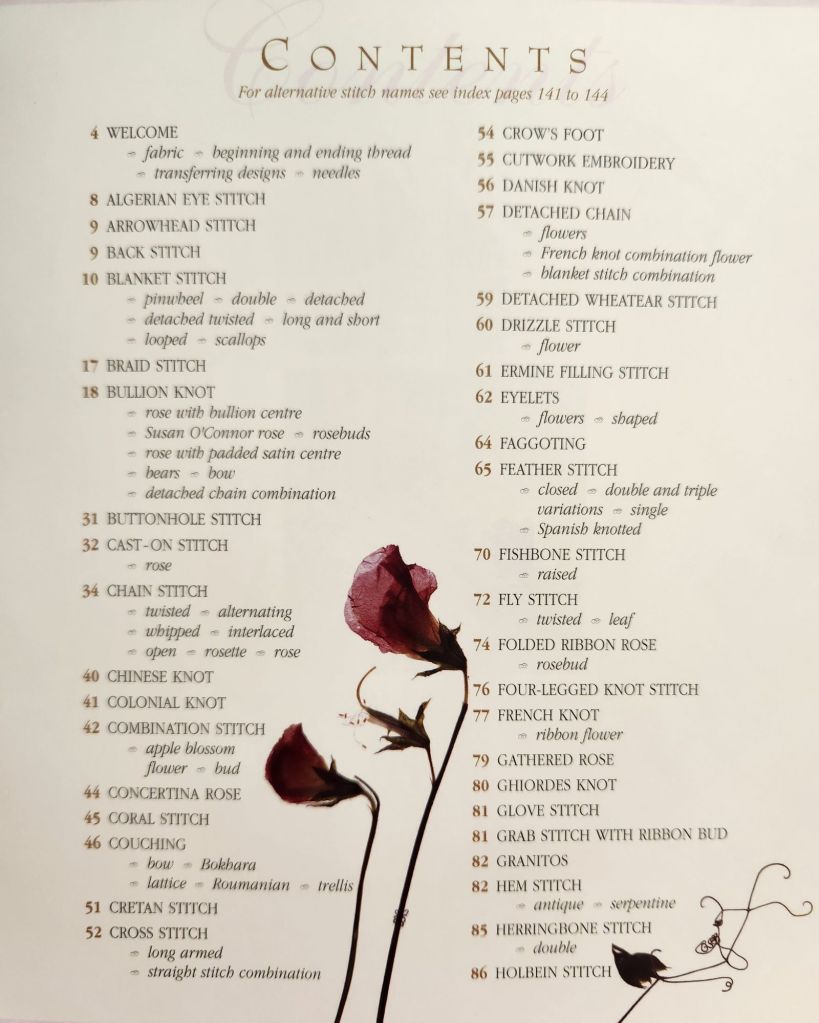

There are excellent color photos and step by step stitched examples (not diagrams). Up to 12 photos per stitch all on the same page. So, no flipping pages.
A to Z of Bullions. One of the first embroidery classes I took was with Mendie Canon and it remains unfinished. I bought 2 more projects and they remain in my Brazilian Embroidery drawer. Some day!

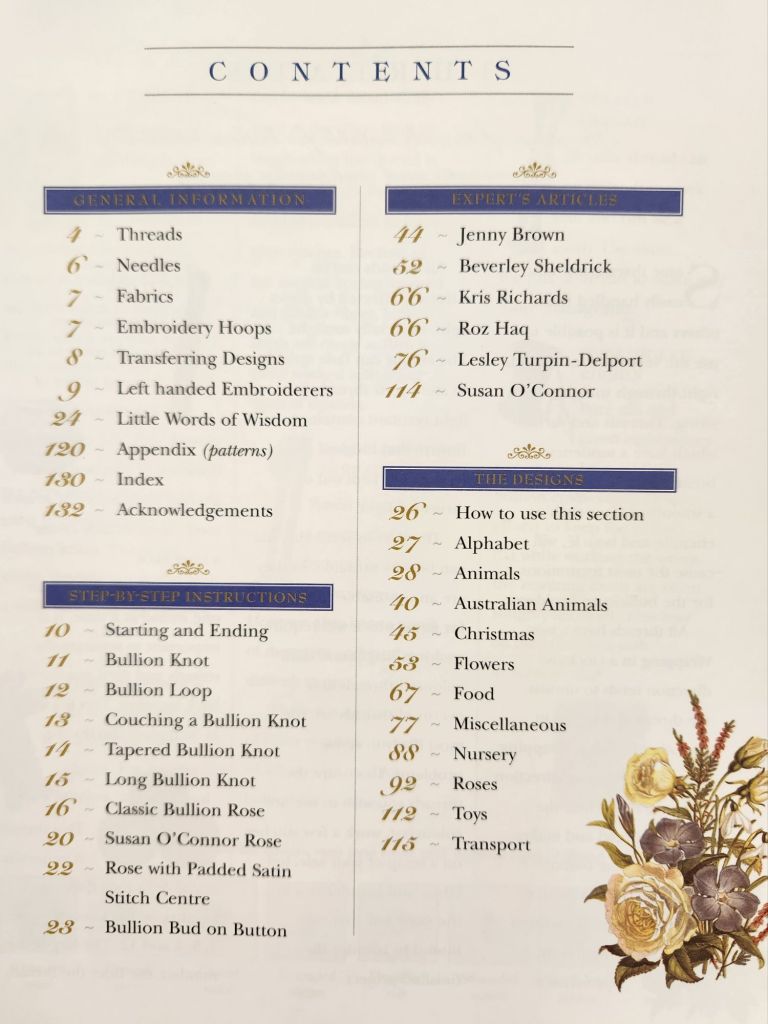
There are 10 pages with stitched step by step photos, including 47 photos for the classic bullion rose. The bulk of the book gives you colored illustrations, line drawings, a list of DMC threads, the number of strands, and number of wraps to make each design. Most designs are individual figures such as a frog or sheep but there is a cute 5″ square fishing frog at a pond of reeds, a very challenging flower cart, any of the rose designs would be lovely wedding gifts, and a cottage spray that measures 8″ long x 3″ high.
A to Z of Embroidered Flowers.
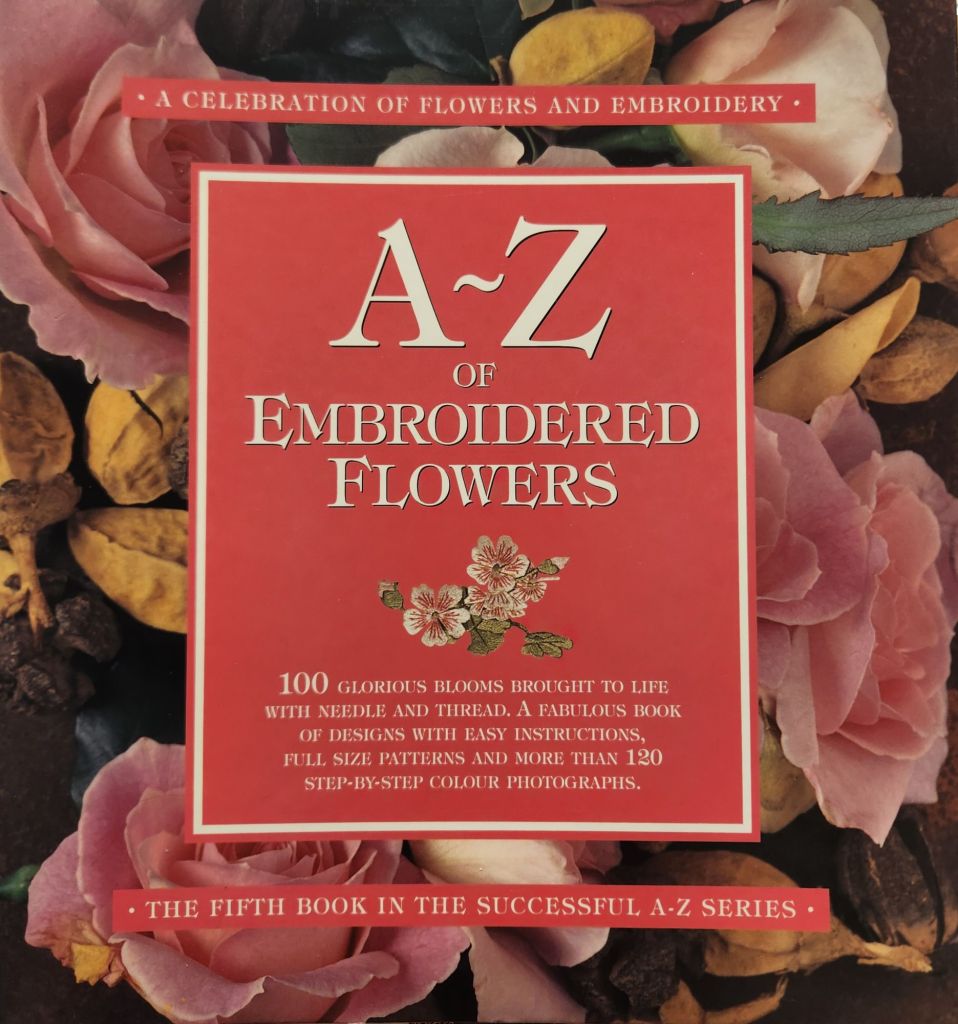
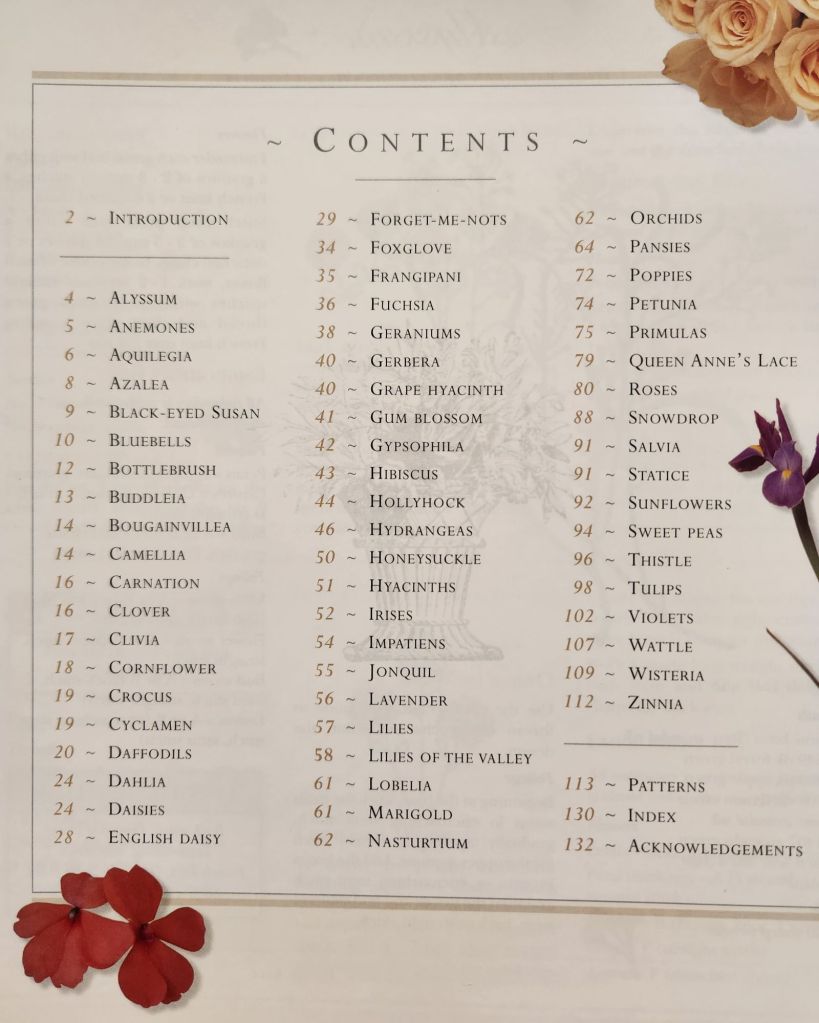
This book shows a stitched flower, threads to use, stitches to use (no stitch directions in this book), order to work, and patterns for transferring are provided. The tulip motif is especially stunning in an art nouveau style. A couple of the designs include a simple vase.
I had great ideas when I bought this book! Different vases with flower arrangements. I’ve got to live a long time.
I played with River Silk ribbon threads and Flair for this Sunflower.

Filed under: An Introduction to Embroidery by Anna Griffiths, Books in My Library, Embroidery Books
An Introduction to Embroidery by Anna Griffiths.
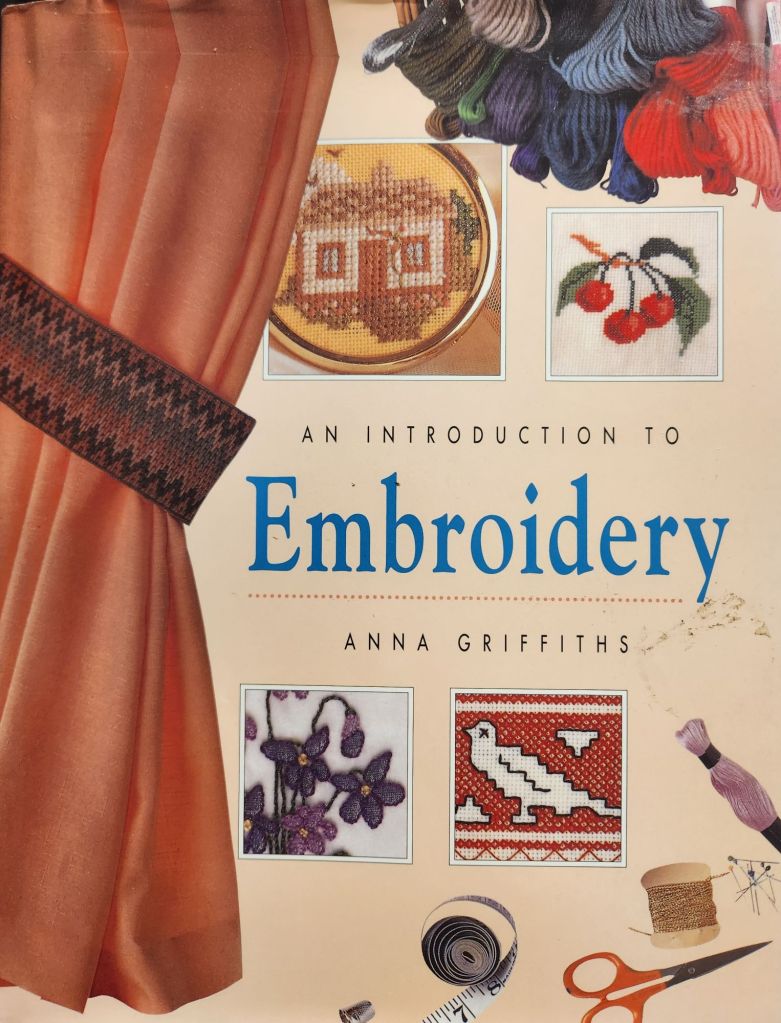

Anna covers canvaswork (a form of embroidery which covers the canvas), free embroidery (lack of restriction), and counted thread embroidery (executed on evenweave fabric).
All photos are in color. Some stitches are provided.
The free embroidery is more relatable than in Design in Embroidery by Kathleen Whyte. Other forms of needlework are covered, including crewel, shadow work (reminds me of the use of negative space to create images), cross stitch (I wonder why cross stitch charts place the colors in the holes on graph paper), blackwork and Assisi (also may use negative space).
Showing how an old vase inspired a design is one of my favorite examples. I’ve taken tons of photos of vases and baskets with the idea of doing an adaptation in needlepoint.

Filed under: Books in My Library, Embroidery Books, Embroidery Stitches by Readers Digest
Complete Guide to Embroidery Stitches by Readers Digest


The book is small at 6.5″ x 8.5″ and is a hardcover. It has normal binding, but pages stay open quite well. There are 2 stitches per page (embroidery and canvas stitches are provided).
The stitched sample photos are all in color, the diagrams are in color, and the stitching order is provided. But, each stitch has verbal descriptions that somehow seem tedious. Although, if the stitch was new to me or difficult, the text would probably be useful.
The price was right (marked down from $23)!
Filed under: Books in My Library, Elegant Stitches by Judith Baker Montano, Embroidery Books
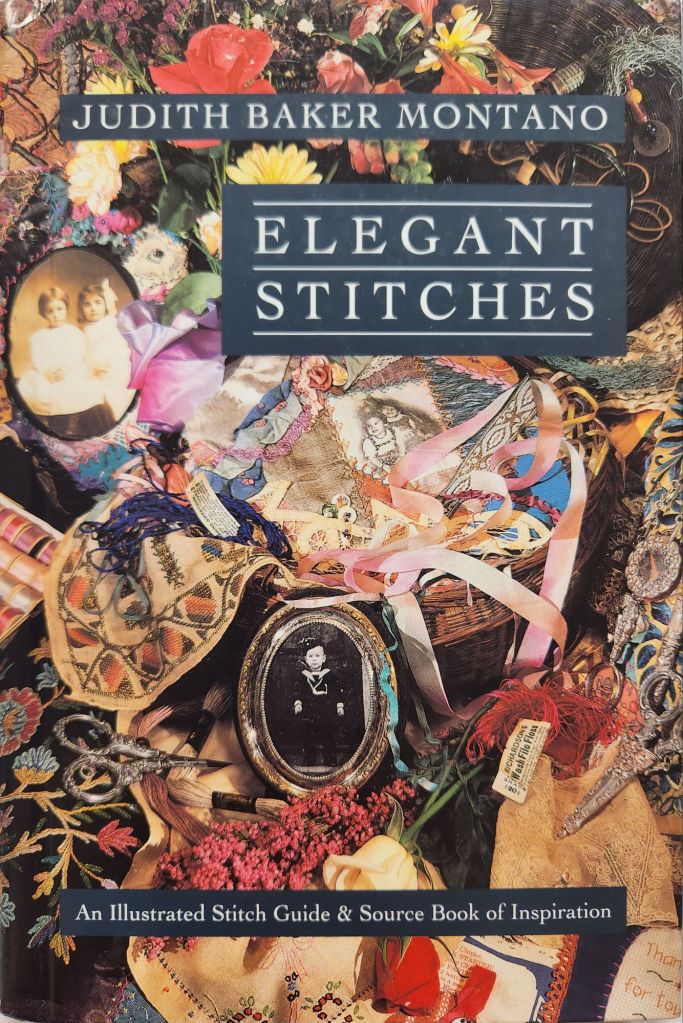
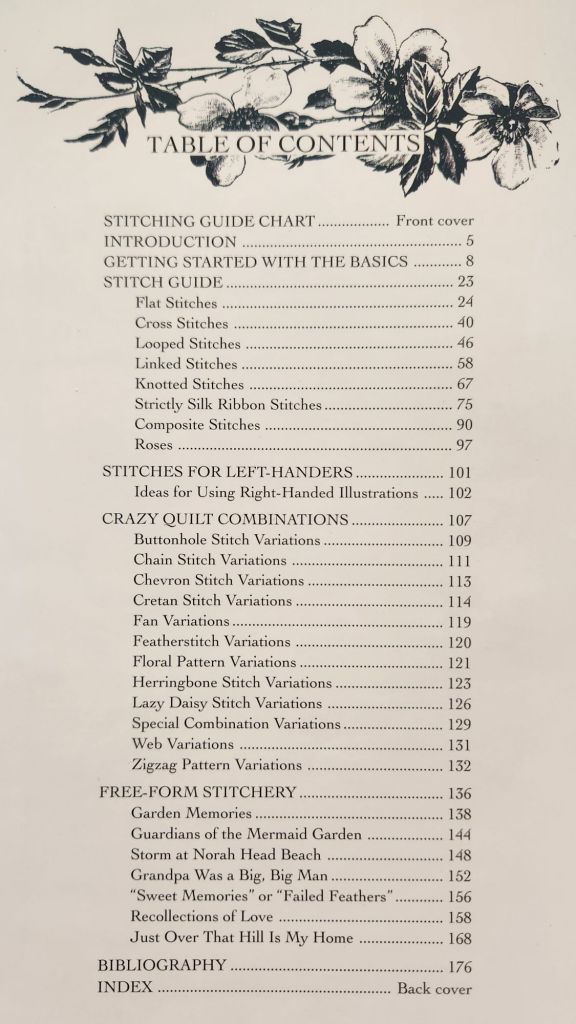
If I could keep only one embroidery book, it would be Elegant Stitches by Judith Baker Montano for many reasons.
The stitch diagrams are easy to follow. It’s a small book at 6″ x 8.5″ with hard covers on front and back but has rings, so pages flip and stay open.
There is the creativity she displays by combining stitches in the Crazy Quilt Combinations and in her realistic Free-Form Stitchery section.
And, she discusses how a photo turned into a colored picture and then into a stitched interpretation.
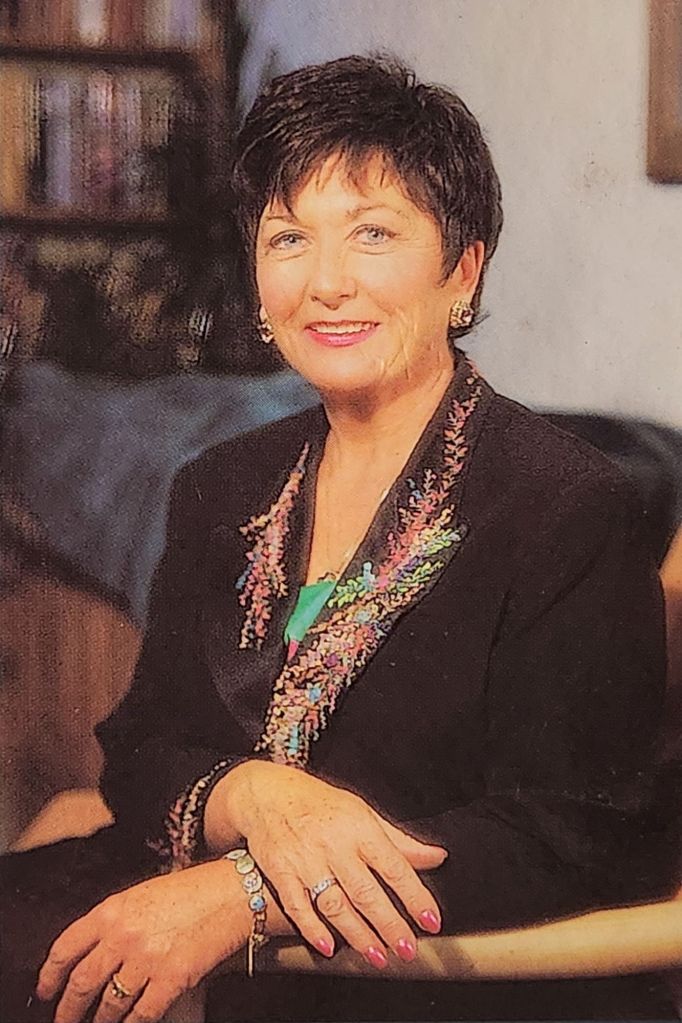
Judith looks elegant in a stunning black jacket that she probably embroidered herself.
Filed under: Books in My Library, Embroidery Books, Embroidery by Kathleen Whyte
Design in Embroidery by Kathleen Whyte


There are some color photos but mostly black and white ones.
This is not a stitch dictionary, although several stitches are discussed. Exercises are suggested to experiment with threads, stitches, colors, and textures.
This is more embroidery related, but canvaswork and drawn work are discussed.
Kathleen focuses on elements of a design with the most examples of free-form abstract pieces. The design on the cover is the most appealing one to me.
Filed under: Books in My Library, Embroidery Books, Making Needlecraft Landscapes by Mary Carroll, That’s Not Needlepoint (It’s Inspired Art Created with Your Needle), which is by dede Ogden
Neither of these are “stitch books” because they are focused on creating projects, but both show you how to apply stitches to create a realistic design.

Making Needlecraft Landscapes by Mary Carroll has 32 landscapes, and stitches are provided to make them. The color photos, diagrams, and detailed description of stitch placement are great.
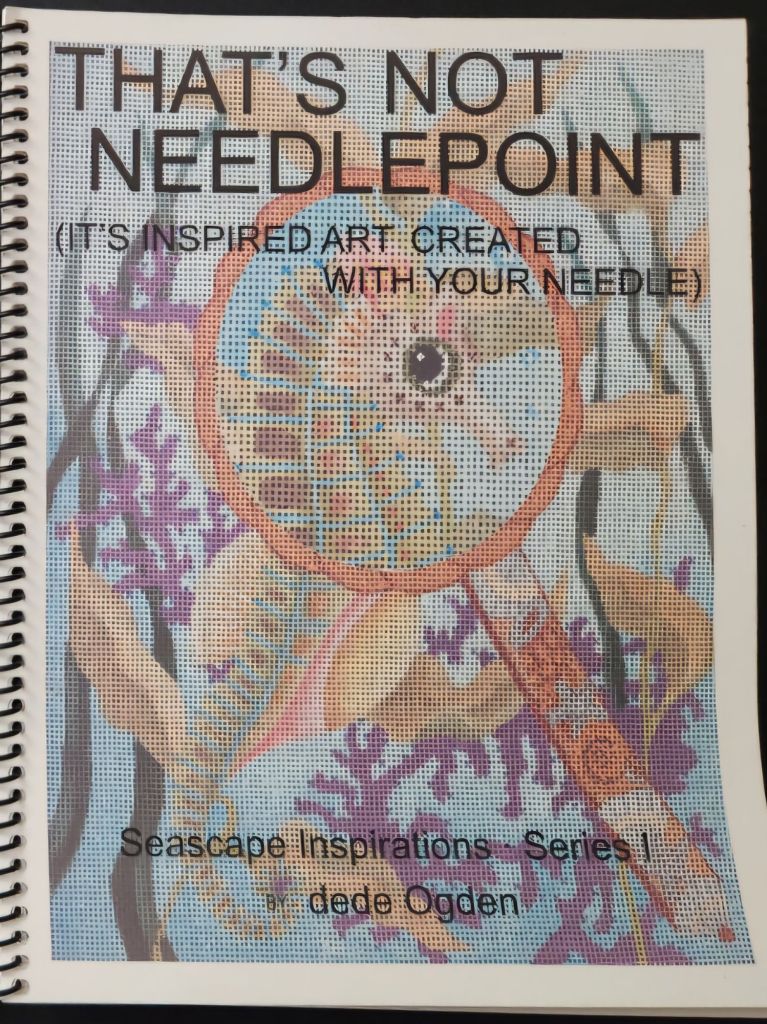
I did post previously about the other booklet, That’s Not Needlepoint (It’s Inspired Art Created with Your Needle), which is by dede Ogden (2011) and represented by Fleur de Paris, Inc. It’s not intended to be complete charts or diagrams to finish the various painted canvases but to offer suggestions for types of elements found in seascapes. The first canvas discussed is Seahorse Spyglass 18073 and is still available (and so is a stitch guide by Tony Minieri). Other canvases discussed are still available from a variety of sources including Undersea Fish 1373, Glass Aquarium Tropicals Green Fish 18015, Glass Aquarium Tropicals Blue Fish 18034, Undersea Garden 1378, Seahorse Pillow 18056, and Enchanted Mermaid Dream 18050.
The Casalgudi stitch is discussed, although I can’t understand where it’s executed. The photos could be better. And, without padding, it’s probably better called a wrapped stem stitch. The Railway Stitch makes a good background stitch. Sue has an interesting Bead Cup Stitch and shows how to expand an overlapping cross stitch to fit fluctuations in the width of seaweed.
Filed under: Books in My Library, Embroidered Landscapes by Helen M Stevens, Embroidery Books
I’ve been asked by my Needlework and Fiber Guild of Media to talk about selecting stitches for needlepoint next month in 30 minutes or less!
Having worked on landscape stitches for Gail Stafford’s class and now her Tar River Trail, I will share them and several canvas books that list stitches by effect rendered (fur, buildings, flowers, etc).
I also have this book, Embroidered Landscapes by Helen M Stevens who shares her masterclass in landscape through 5 major projects with templates, color charts, and detailed explanations of design elements.

These designs employ mostly linear stitches, including stem and straight stitches. The filling stitches look linear to me but are called opus plumarium or feather work.
For these designs, it’s less about the stitches and more about perspective. In the photo on the cover, you can see elements in the close, middle, and far distances.
Shading plays a big part with each design using between 19 and 26 threads. In 3 of the designs, between one-third and half the threads are in the yellow and green family.
The use of contrasting threads is employed by using shiny threads to add vibracy up close and threads with duller texture to recede.
Stranded cottons, stranded and twisted silks, Japanese floss silk, fine floss silk, and spun (fine twisted) silk threads are suggested.
An example of varying thread types was using twisted cotton for grass, a plied silk for a glossy river, and a very fine untwisted silk floss for the sky.
I am disappointed that actual threads used in the designs are not provided. Only the colors are suggested in the color coded design map. It would have been helpful.
These are best worked on a smooth, evenweave fabric that does not stretch. Suitable fabrics include cotton, polyester cotton (Percale), and linen. Although she suggests evenweave, she says, “As a general rule, if the weave is open enough to be used for counted thread embroidery, it will be too wide for us!”
One of the scenes resembles the perspective that I have designed for the second design from Debbie Rowley’s class. I did so want to get started on that, but I do really want to finish Tar River Trail before the seminar. Then, I’ll want to finish those pieces (3 classes)! Oh my. Got to get my head out of this book and back to stitching!
 Melitastitches4fun's Blog