Filed under: Brandywine Chapter, Embroidery Guild of America, Petite Flower
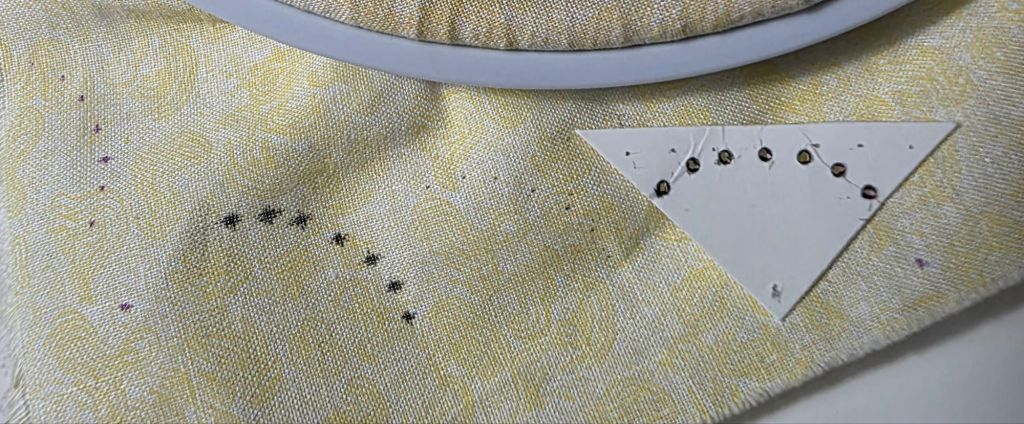
I selected the Ray stitches with French Knots from AL’s suggestions and needed a template for the corner motifs to make sure they are all the same length.
So, I made a cardboard model on magazine board and poked holes after measuring (seen on the far right in the photo). I tested making the marks with a purple pen (left), Sharpie (center), and a #4H pencil. The Sharpie ran into the fabric and will not be used. If the purple pen marks disappear, those dots are the easier to see than the pencil but I can see the pencil marks enough to darken them before stitching or press harder when making them.
Luckily, I had stitched the Bijoux from the center out. So, it was easy to remove the outermost 4 stitches.
I didn’t have anymore of the Valdani #8 Pearl Cotton. So, I went to my stash and found Soie Perlee SPS274.
An extra piece of magazine board would have made it even stiffer but I managed to fold the fabric across the back holding in place with glue until I stitched it closed.
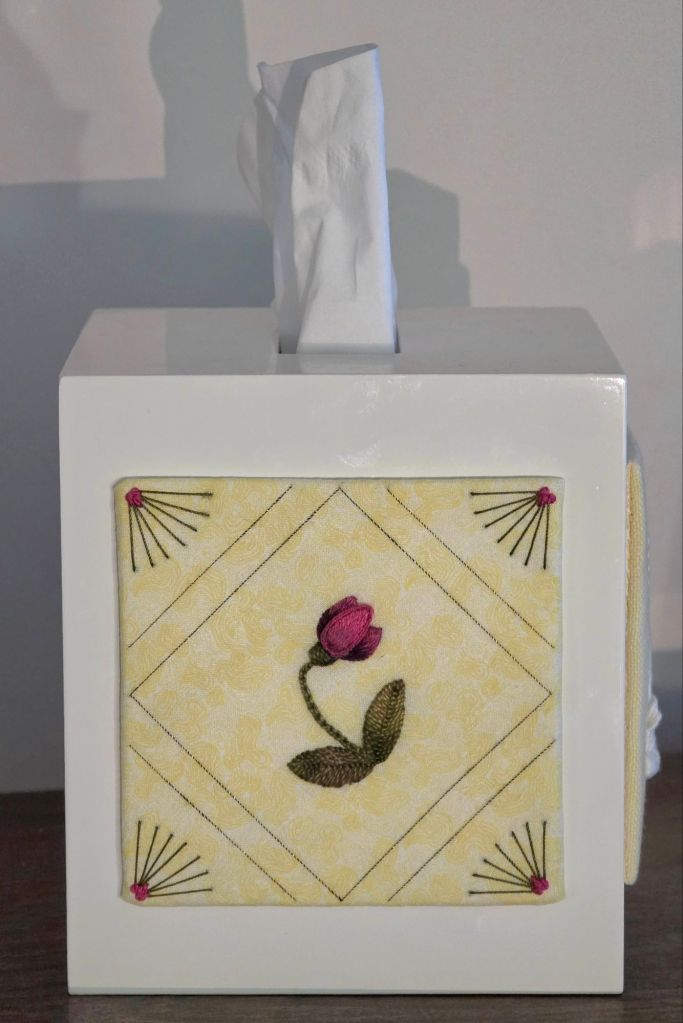
Here’s the finished piece in place on the 3rd side of this tissue box.
Filed under: Brandywine Chapter, Embroidery Guild of America, Petite Flower
Thanks to Brenda C and Linda P for confirming that a trellis would be good for the petite flower that I stitched with my EGA Brandywine Chapter. I woke up thinking a trellis would be the way to go.
The one thing about a trellis that had me worried is that I wanted straight lines and if this fabric is an evenweave, it’s too small for me to count! So, I went to my scraps of monocanvas and found a piece of 10 count monocanvas giving me an easy grid to stitch. Way easier to count than 18 count canvas. I stitched an edge the same size that it would be finished (4″ square) so I could cut right up to the edge. The monocanvas also adds some stability to the fabric. But, I could see through the fabric and I didn’t like that. So, I cut a 4″ square piece from the white fabric that Ann H had supplied to make the stumpwork petal to place between the monocanvas and the yellow design fabric. Seemed perfect so far. I never tried this before. Fingers crossed.
Now I had a reasonable expectation of correct, straight lines but don’t normally count on the back! I looked up trellis photos online and some are gorgeous! But, a simple flower needs a simple trellis.
I tried one strand of Kreinik Silk Mori #8050 Black but that was shedding after 4 long stitches. So, off to my thread stash where I found Bijoux MMT424 Renaissance Gold (which is half black).
But, the number of canvas threads was not the same on both sides (differs by one). And, once I had 5 lines going across a corner the 4th and 5th lines were crooked with careful counting (forgot to get a photo). At this point I abandoned the criss-crossed trellis look. I needed an even simpler finish.
The inner 2 lines looked good but I wanted a third line. Placing it further into the corner made sense to me. But I thought there was something wrong with my eyes because the lines seemed ok until they weren’t.
It took several attempts to get all the lines straight by simply measuring the width of each end of the band. For what this is and where it’ll be displayed, I think it looks fine.
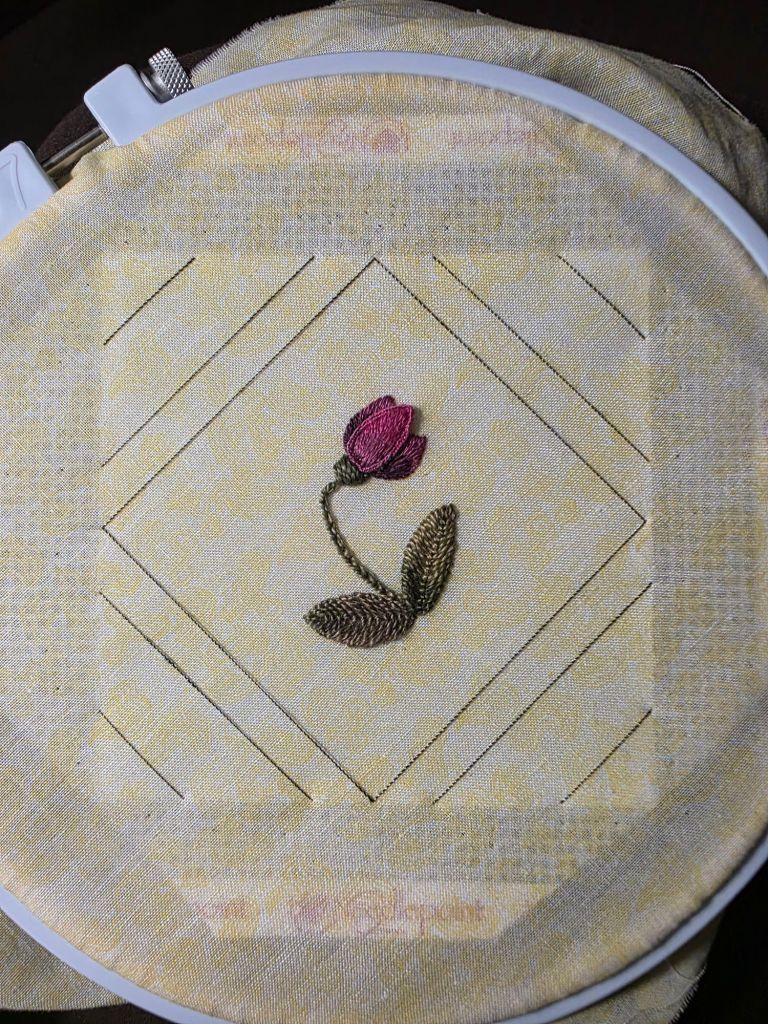
But rather bland. I decided to see what AI could think up. I use Google Lens and asked for suggestions for the corners. I got complicated suggestions as well as these that appealed to me.
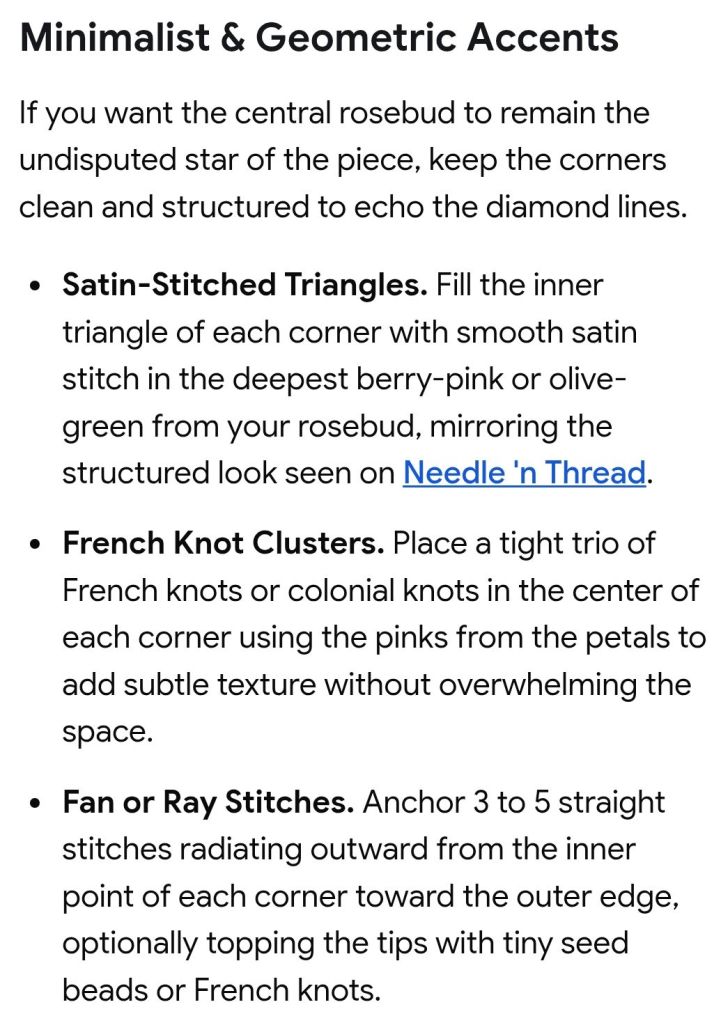
AI offered to pick to the best solution for me and I asked it to pick the best one from only the three suggestions above and generate a photo. This was what I got:
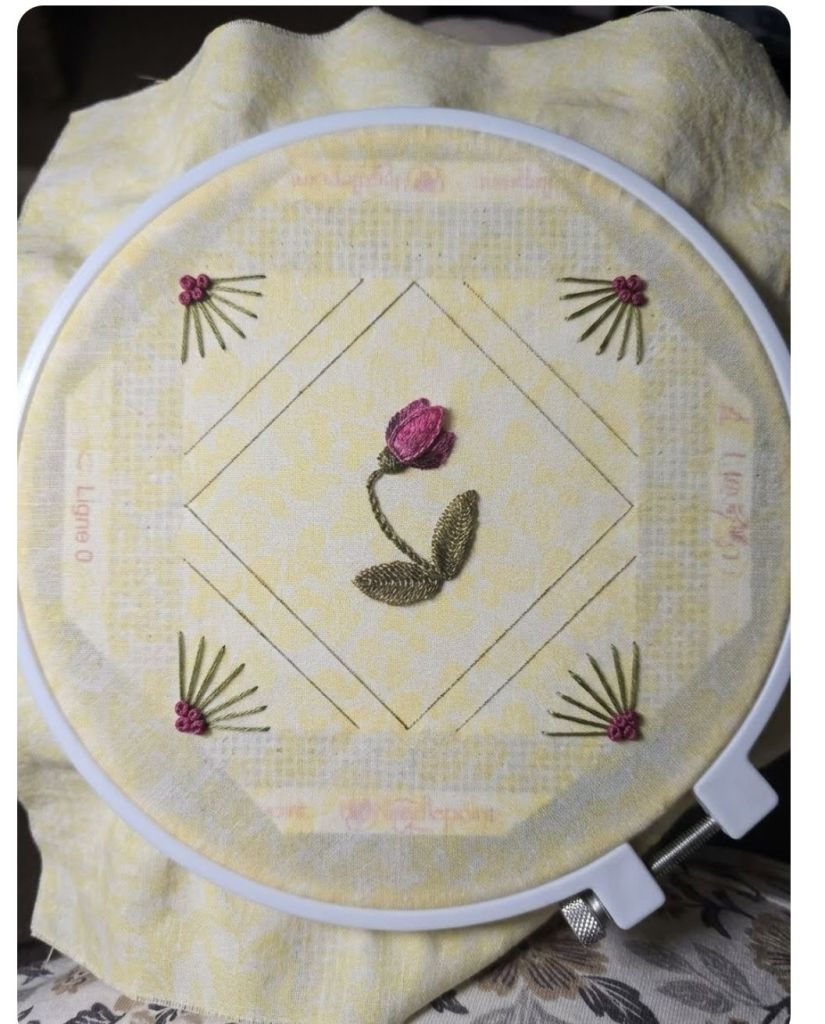
I asked it to replace them with a cluster of 3 Colonial Knots in the corners. This is what I got:
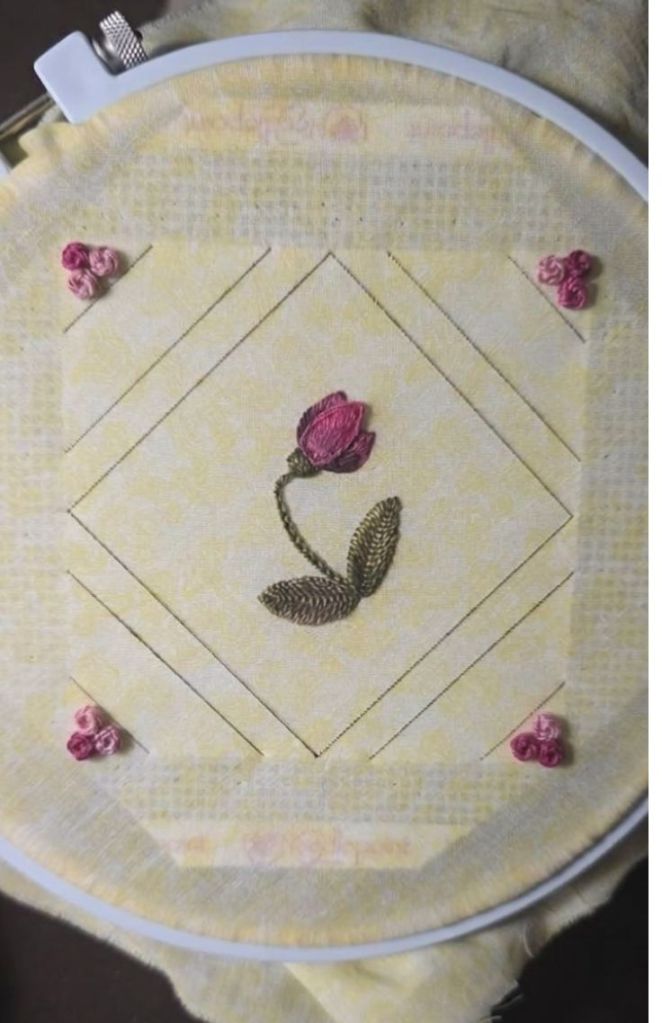
I don’t know about you but I am impressed! It drew on the best embroidery site (in my opinion, Mary Corbet’s) and came up with great suggestions.
Until I saw one of the above options, I was willing to live with my bland finish. However, one of them was so much better that I have to redo it! What would you do? Which one did I choose. Wait and see. That’ll be the final post for this piece. Hopefully, sometime tomorrow.
Filed under: Brandywine Chapter, Embroidery Guild of America, Petite Flower
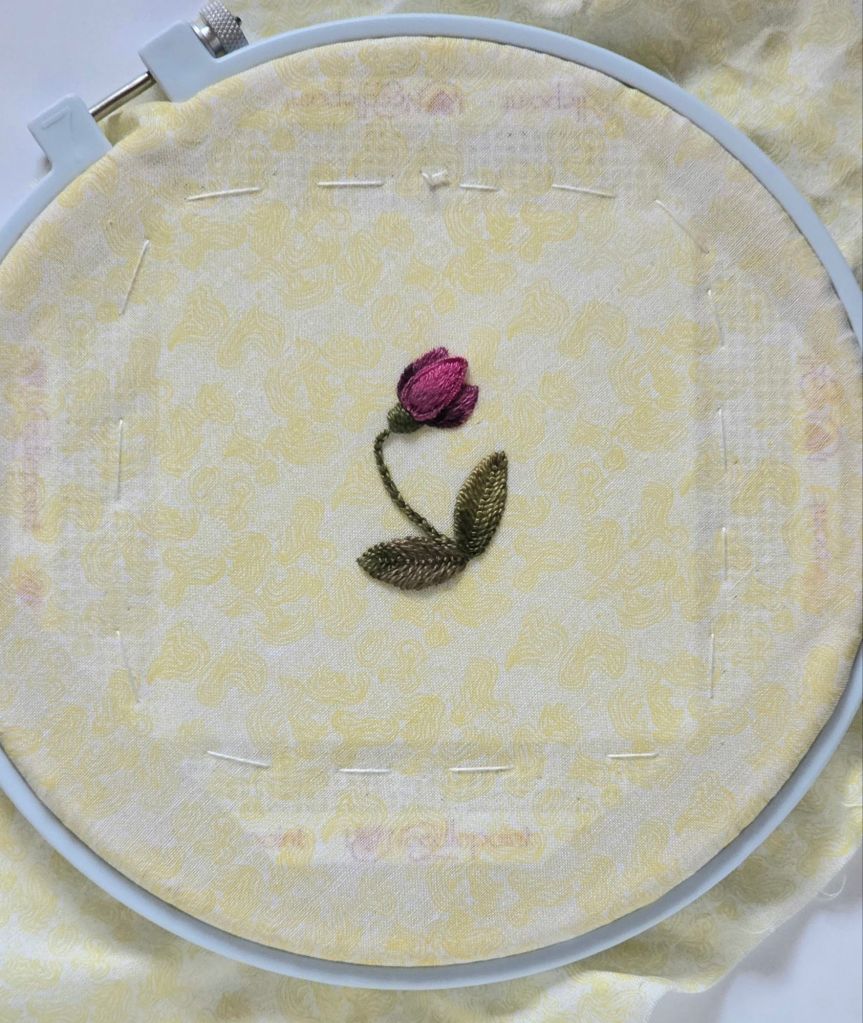
Today, Ann H led us in working a small (2″ tall) flower in shaded threads with stumpwork. She provided the muslin fabric (yellow/white) with the outline of the flower already in place, overdyed green Valdani pearl cotton #8 for the leaves and stem, wire for the stumpwork, and instructions.
I brought my own silk threads for the flower in three shades of one color, hoops, and needles.
We met for 4 hours and took a long lunch break in the Country House’s Bistro. It’s a lovely retirement/continuing care facility where one of our members reside. This is all that I got done while there.
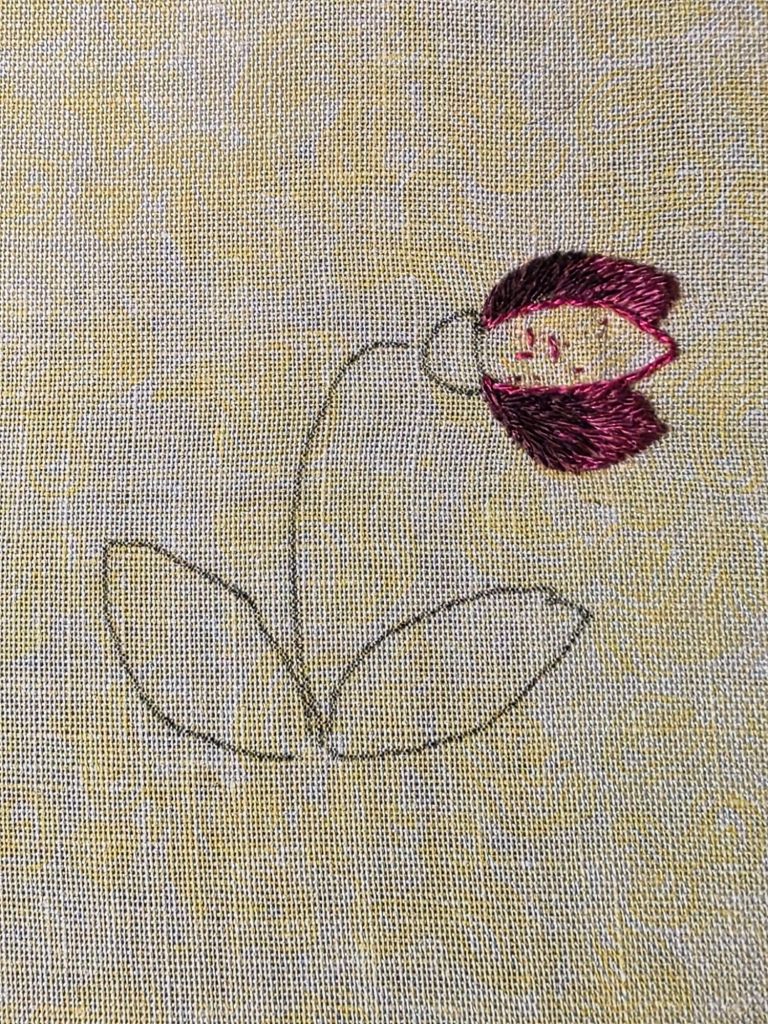
But, it went quickly once I sat down at home.
Ann changes threads when stitching the buttonhole stitch to hold the wire in place. This allows the shading inside the petal match the outer edge. I think it’s a great idea. That is different from what Celeste Chalasani taught. Celeste had us stitch the wire in place in the lightest color all the way around.
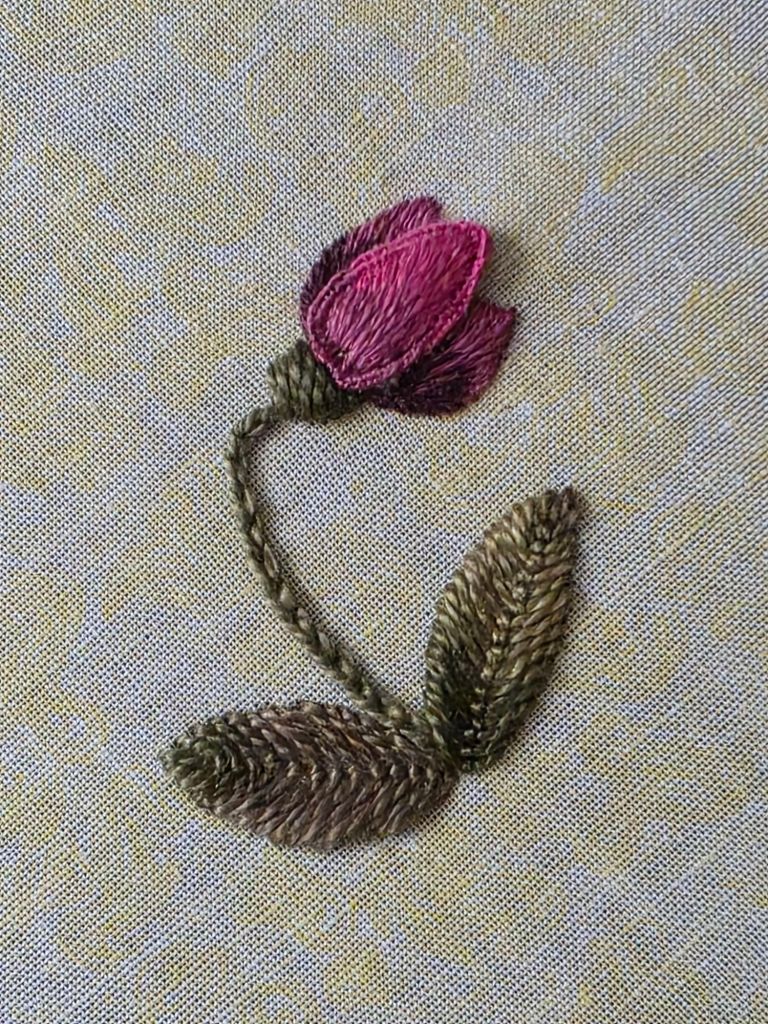
Being only 2″ tall, I want to add something. Then finish as a flat and add to my yellow tissue box. The other two pieces on that tissue box are also EGA Brandywine Chapter projects, Casalguidi and Chicken Scratch.
Should I add butterflies? A trellis stitch background? Thoughts? Ideas? Suggestions?
Filed under: Brandywine Chapter, Embroidery Guild of America, Huck Embroidery Towel
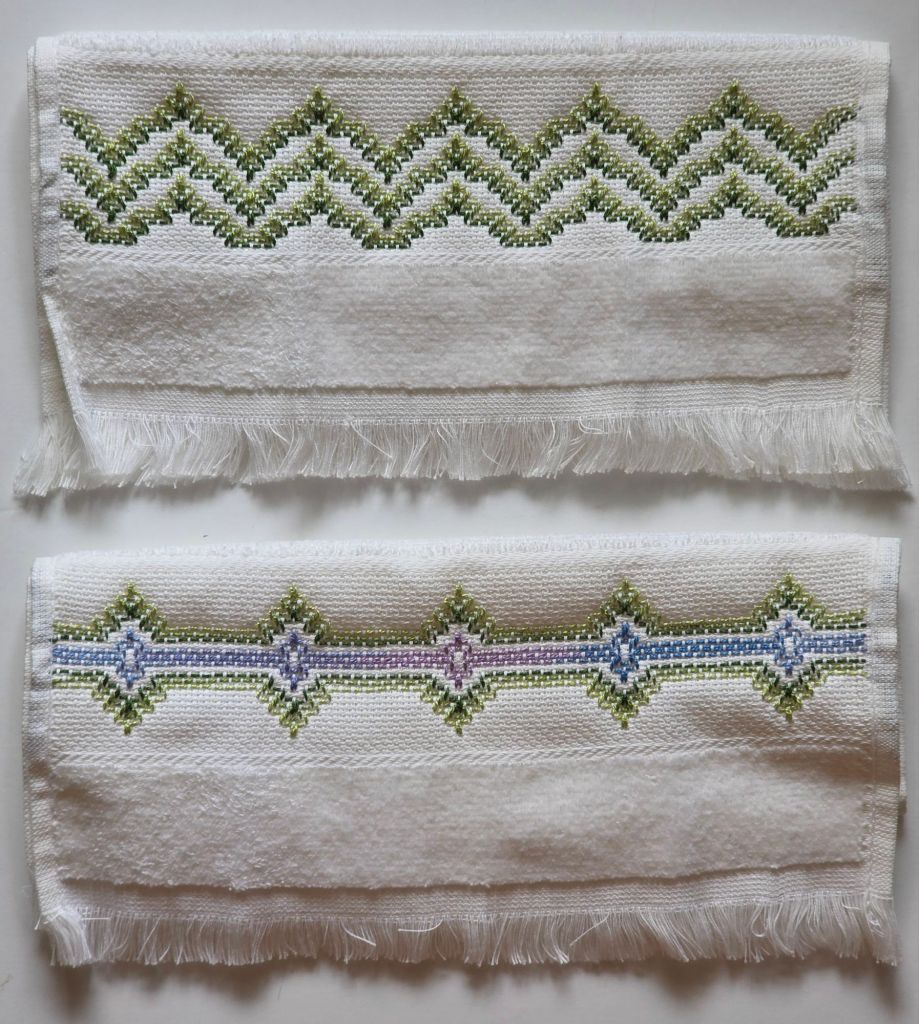
Huck Embroidery towels seemed the easiest to travel with and I would have gotten both done except for our last night’s baseball game not being shown on a “normal” channel. We had to go to the hotel sports bar to watch it and the light wasn’t conducive for stitching. Last night, I finished it during the rain delay and before it was postponed. The patterns had to fit within the band, be pretty, and not too difficult.
I counted the width and figured out how to get 5 full motifs centered. These patterns are called Crest and Meadow. Both use DMC Pearl #5 in greens: 3345, 3347, and 3348. Meadow added DMC Pearl #5 variegated 4215. Of course, I cut the variegated thread so the 4 strands would match and would place the light purple portion in the center.
Filed under: Brandywine Chapter, Embroidery Guild of America, Huck Embroidery Towel, Newsletter Articles
I have been stitching ROY G BIV by Kathy Rees since my finger has (mostly) recovered although I still have an indent. Maybe it’s been there & I never noticed it!?! But, I can’t post ROY G BIV yet because I ran out of threads for my second piece. Linda’s Boutique has two of them and I’ll get them and the third one I need at Fireside Stitchery at our Monday meeting. Linda M comes through again! So, I moved onto Heart of the Matter by Wendy Moore but that will take some more work before I can post.
So, when an email came from EGA regarding Huck Embroidery, I decided to share that resource which was already included in my article on Huck Embroidery that I contributed to my EGA Brandywine chapter newsletter a few months ago. I put some effort into the articles and why not post them here too. They focus on a particular topic and I find online resources about that topic. I love researching about as much as stitching. Since beginning back in July of 2019, I’ve written 40 articles for our newsletter.
First, EGA Embroiderers Guild of America) has an ongoing series devoted to Embroidery Techniques from Around the World | Embroiderers’ Guild of America. It has included some of the topics I have addressed in my articles including Huck Embroidery. The great thing about EGA and ANG is that they both offer some free information on their websites for non-members as a way to entice you to join. I find both guilds different and interesting.
Huck Embroidery is also called Swedish Weaving. Since the thread weaves through the fabric, you will need fabrics that have a layer of warp or weft threads that “float”, allowing you to stitch under only those threads so that the embroidery is on the surface and never passes onto the back.
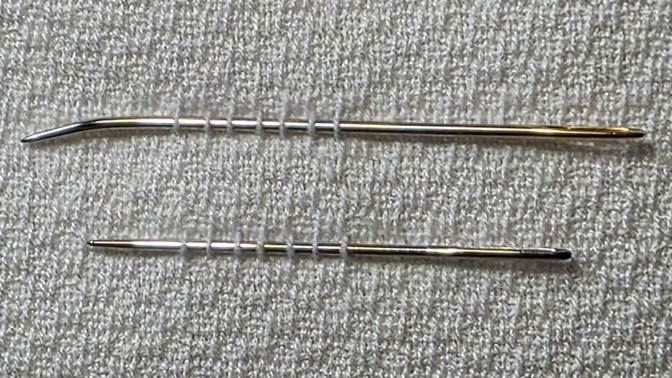
Huck fabric has only vertical floats for sliding your needle through. Aida fabric works as well. A blunt needle tapestry or Huck Embroidery needle with an angled end helps scoop under the threads.
The loop stitch can be open where the thread never crosses over itself. Or it can be closed, where the thread does cross back through a float you have stitched either in a single loop or figure eight or twisted loop.
Whenever possible, I turn to Mary Corbett at NeedlenThread.com to find out all about any needlework technique. She’s amazing.
- Huck Embroidery Kits – NeedlenThread.com (July 2009)
- Huck or Swedish Weaving & a Towel from Julie – NeedlenThread.com (April 2019); pattern used in Julie’s towel was obtained through a link from Julie’s blog to the Wayback Machine. The Wayback Machine is an initiative of the Internet Archive, a 501(c)(3) non-profit, building a digital library of Internet sites and other cultural artifacts in digital form.
Other projects include Open Library & archive-it.org. - Swedish Weaving Pattern Directory – Review – NeedlenThread.com
- Huck Toweling for Swedish Weaving – Some Finds – NeedlenThread.com (Sept 2024)
Other Resources:
- Embroidery Techniques from Around the World – Embroiderers’ Guild of America
- How Do You Embroider A Huck? A Complete Guide for Beginners – Wayne Arthur Gallery
- Huck (Swedish Weaving) – needlery!
- Huck Weaving Stitches
- https://youtu.be/BE5pwS6e5dw?si=0J5LjoIhPV5m1D5x (demos loop stitch)
- Retail Store – Nancy Zieman (Huck Fabric)
- SwedishWeaveDesigns – Etsy
- Learn The Art Of Huck Weaving – Swedish Weaving Patterns — Spruce & Fjell (includes 2 free patterns and a template for you to design your own)
Huck Weave Template
Enjoy your exploration of Huck Embroidery.
Filed under: Brandywine Chapter, Embroidery Guild of America, Huck Embroidery Towel
I stitched too much getting caught up with Razzle Dazzle and Chicken Scratch. The repetitive manner of pushing the needle up from below the canvas with my middle finger on my right hand caused a dimple. I should have used a thimble or a finger pad to protect the area. But, I didn’t and my finger needed a rest!
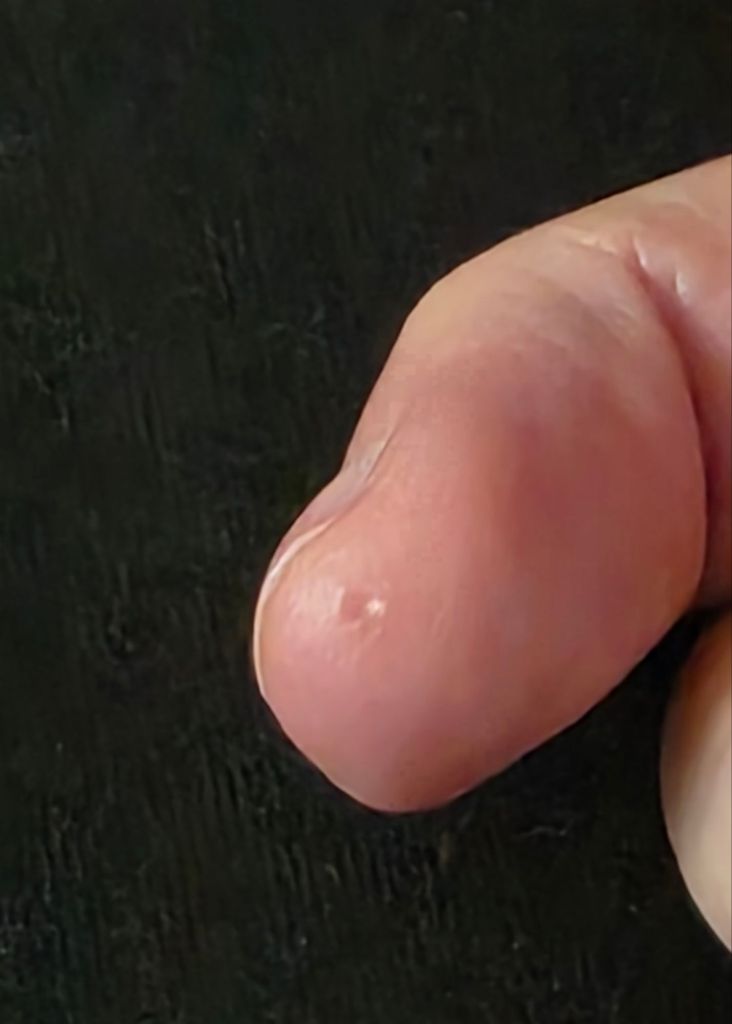
Or, I could work on something that uses a different motion. That brings me back to Huck Embroidery that my EGA Brandywine Chapter explored a few months ago. I had extra towels left after leading the program. So, I stitched/embroidered a couple more in different colors.
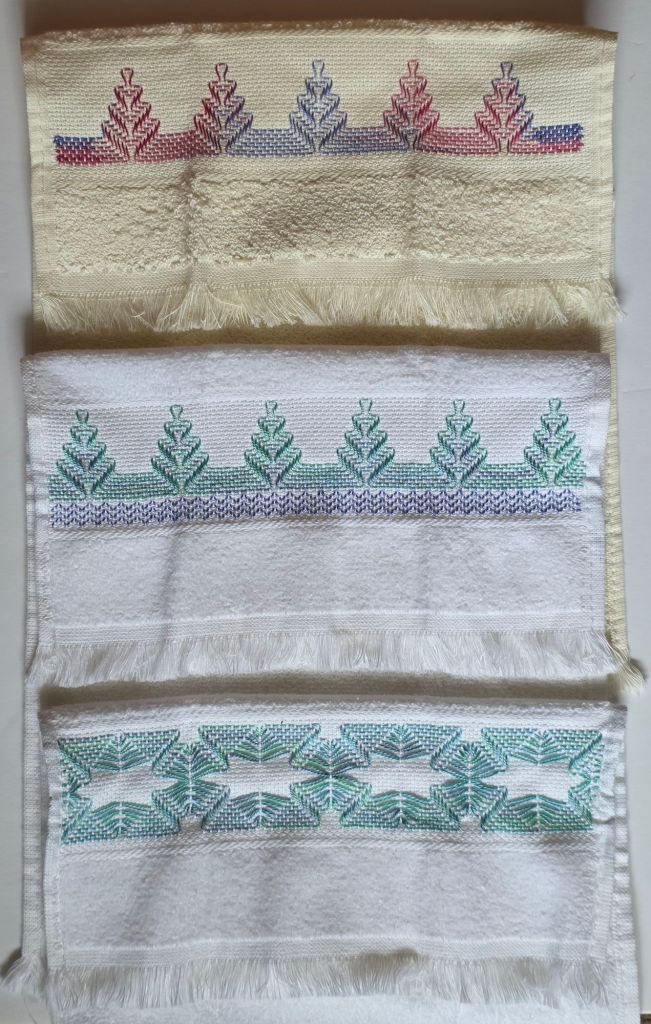
The top one was my first and I didn’t start high enough to fit the bottom band. I used Leah’s Overdyed Thread, a discontinued thread line. There is a wide variation from red to blue to blueish purple. I color matched the thread and started each row in the center working half to each side. Since the path changes, the colors did shift but it’s gradual.
I redid that pattern for the middle towel but started high enough to allow room for the solid colored bottom band as designed. The bottom two towels used an overdyed DMC Pearl #5 4030. This thread has very slight color changes from very light aquamarine to a light blue. For contrast, I went with DMC Pearl #5 793 Medium Cornflower Blue on the bottom band.
To offer some variety to members, I provided a second free pattern that I located on the internet. It’s the bottom towel. It just fit perfectly!
Those towels have been done but I forgot to post them. And, I still have more towels. So, I pulled one out. With Huck Embroidery, the needle remains on the surface and slides under vertical ground threads to create the pattern giving my finger some well deserved rest and recovery time!
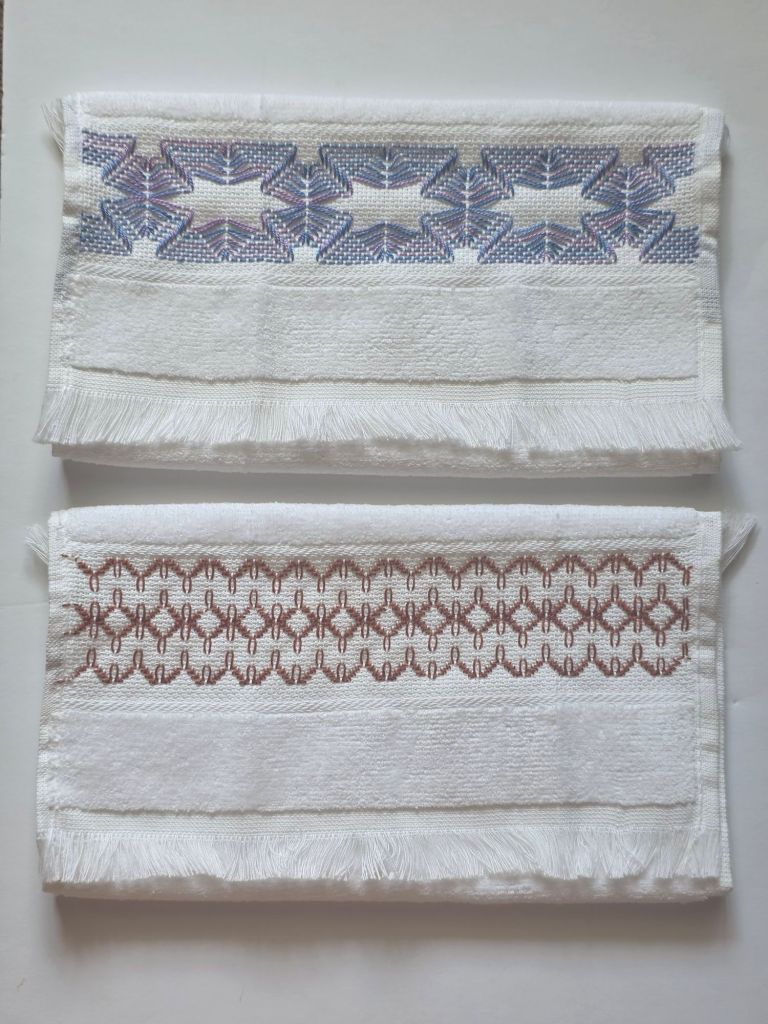
This towel is using DMC Pearl #5 4215 with pink, blue, and light purple. I did not color match the thread. The general rule of thumb for a working thread length is to cut X times the length of the area being stitched according to the instuctions. Once you stitch the first row, you can shorten the length. Twice the length was plenty for this pattern (2.5 x recommended). Starting in the middle working half left and half to the right is also the norm with Huck Embroidery. As you can see, I started the pattern in a different location. Four full patterns versus three plus two halves on each end. Starting in the center guarantees a symmetrical pattern which I think you know I like and which is why I like color matching so much. But, it looks fine done randomly too especially with less variation in colors of the particular overdyed thread. It’ll be folded so it won’t matter but I like the three full pattern better than the four full pattern.
The second towel is Pendant, one of 50 patterns from the book, Swedish Weaving Pattern Directory by Katherine Kennedy. It says that pearl #5 can be used but stitches were looking too close. So, I switched to the thinner pearl #8, Finca 7656, a solid rust color. This pattern calls for 5 times the length. It incorporates the loop stitch. Believe it or not, it was a tricky pattern. I had several missteps but always got back on track. I should have started left by one and down by one to be better centered but once it is folded and hanging, it will look just fine.
There are 6 more towels to do and although I can still see a slight dimple on my finger, it’s not tender. So, back to needlepoint!
NOTE: Pendant gifted to Janet G (October 2026).
Filed under: Brandywine Chapter, Chicken Scratch, Embroidery Guild of America
My EGA Brandywine Chapter explored Chicken Scratch at our last meeting in August.
Brenda C and Shirley H drove up from Delaware. Always nice to see them! I love Brenda’s. It’s a lovely lacy example of Chicken Scratch. Check out Brenda’s Needlepoint Studio: Chicken Scratch – 8/16/26 at https://share.google/iMeNh7lPemMpLi7mW
I made mine into a small sampler by trying a few different stitches Karen S and Kathy A provided. They brought swatches of fabric for us to select from and I knew this would be great for my bedroom tissue box.
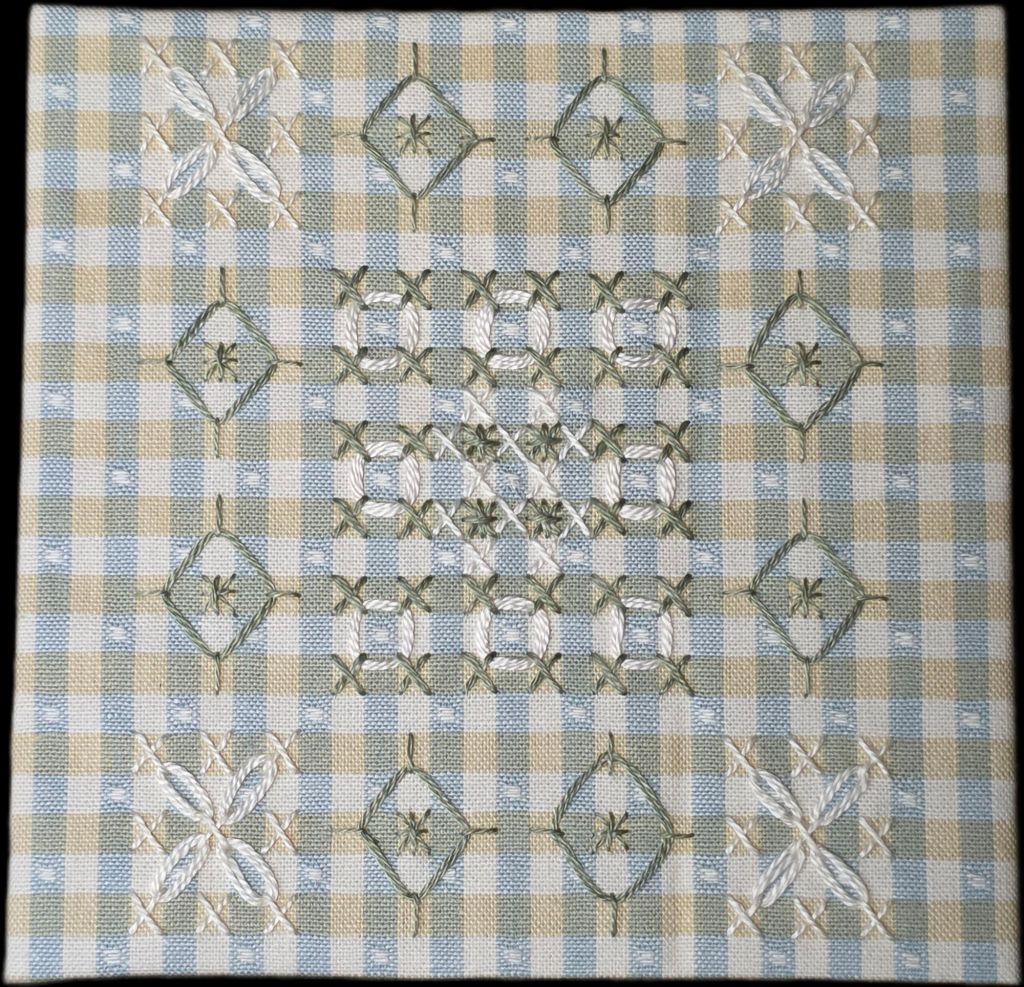
The fabric was large enough to finish the back! I folded the fabric the same as how I wrap a package. I used the purple glue to hold it in place and then used invisible thread to sew it closed in case the glue loosens.
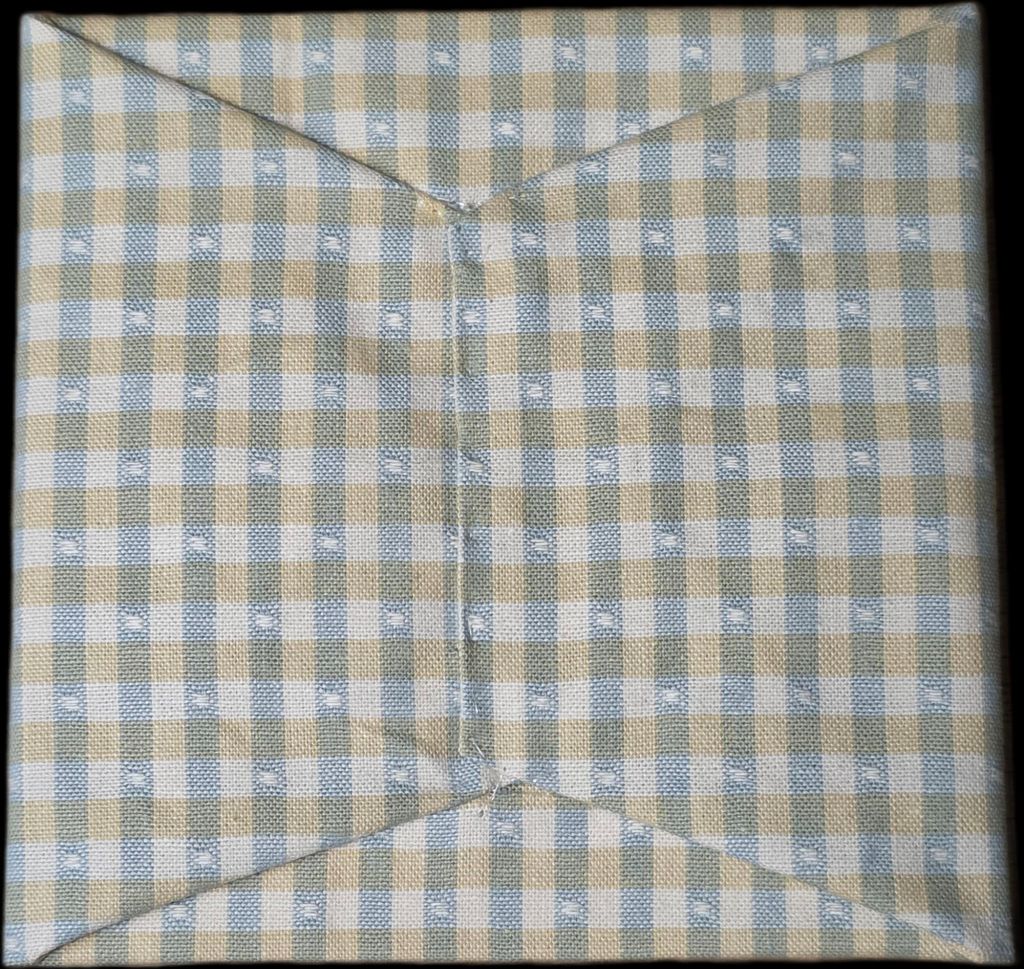
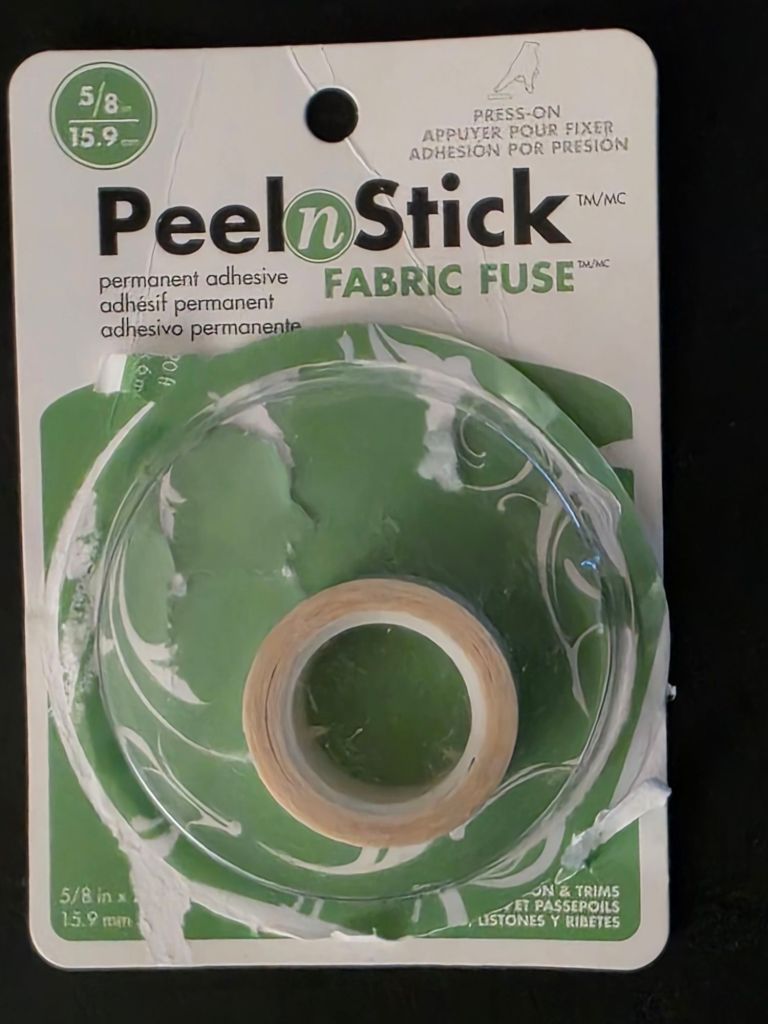
Then, four strips of Peel n Stick Fabric Fuse was applied to the back.
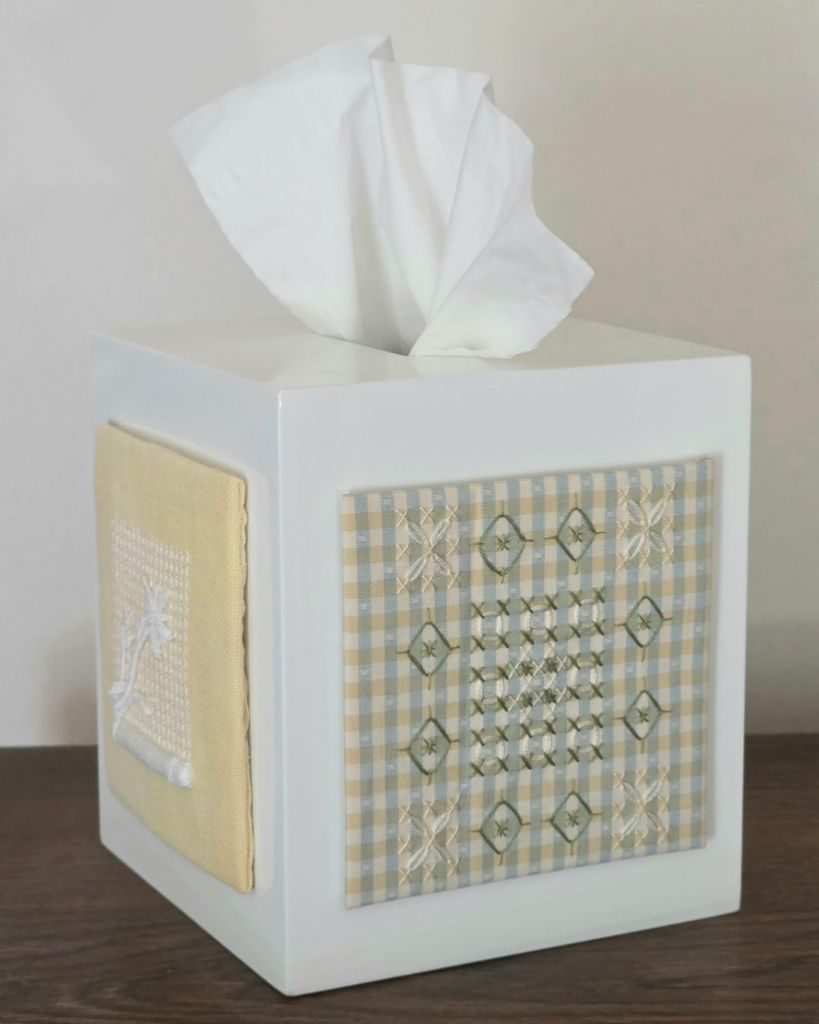
And, I placed it next to my other EGA Brandywine Chapter Casalguidi project on the tissue box. I love it!
Filed under: Branch Weaving, Brandywine Chapter, Embroidery Guild of America
Who knew branch weaving is a thing?!? I did not know about it until our EGA Brandywine Chapter meeting last month. Kathy A and Karen S are leading us through September.
An internet search reveals there are plenty of examples of branch weaving. Most don’t say what they do with the finished branches. One said hang it on your wall. Mine is not wall worthy! Some examples are quite complicated and pretty. As far as mine goes, I will stick it in the ground in the back yard.
Thanks to Patrick for gathering branches, we had plenty to choose from. Kathy and Karen supplied the yarn. I brought a couple of large eye needles.
Mine returned to this month’s meeting and I was the only one who brought their finished piece! The weaved area is about 5″ x 7″. It was also my Show & Tell for the Needlework and Fiber Guild of Media where it went over well.

I’ll need to sharpen the end (somehow) and stick it in the ground in the backyard. I guess I will do some whittling tomorrow!

This month, we were introduced to Chicken Scratch but more on that another time.
I wasn’t able to whittle the end (no proper tool in the house). So, we dug a little hole and filled it back in with the dirt. It joins our menagerie including a hummingbird and frog can be seen nearby. We’ve had a good rain and my garden sculpture of weaving survived.

Filed under: Brandywine Chapter, Embroidery Guild of America, Lotus Blossom by Brenda Kocher, Or Nué Hearts by Brenda Kocher
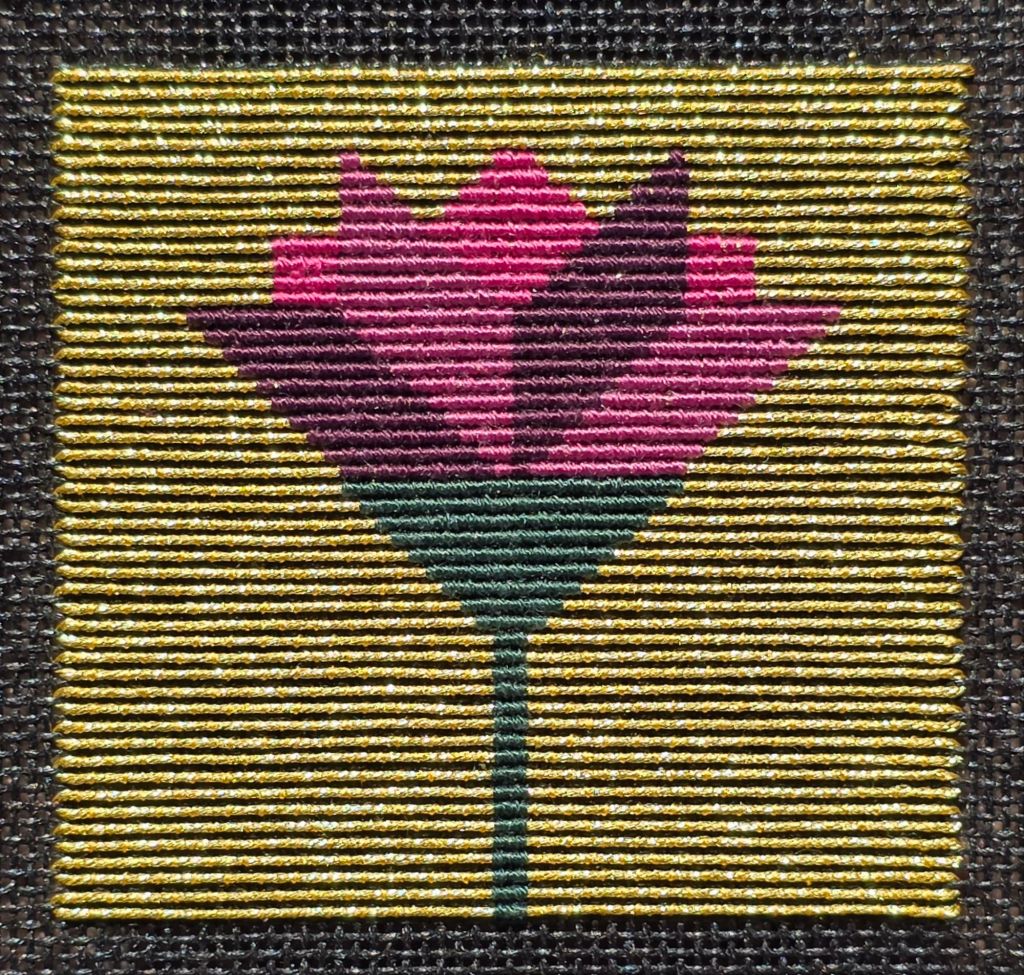
My Or Nué Hearts and Lotus Blossom by Brenda Kocher are all framed and ready for Tuesday at our EGA Brandywine Chapter Quarterly meeting.
I had enough thread and canvas space to make three pieces. The extra framed Heart is going to Olga, the woman who works the gate at the retirement community where we meet. Very nice lady.
The frames are from Michael’s. There are a few canvas threads left unstitched around the edge of the stitching so that it fits snuggly. It’s stitched on a black canvas and black really helps set off the gold.
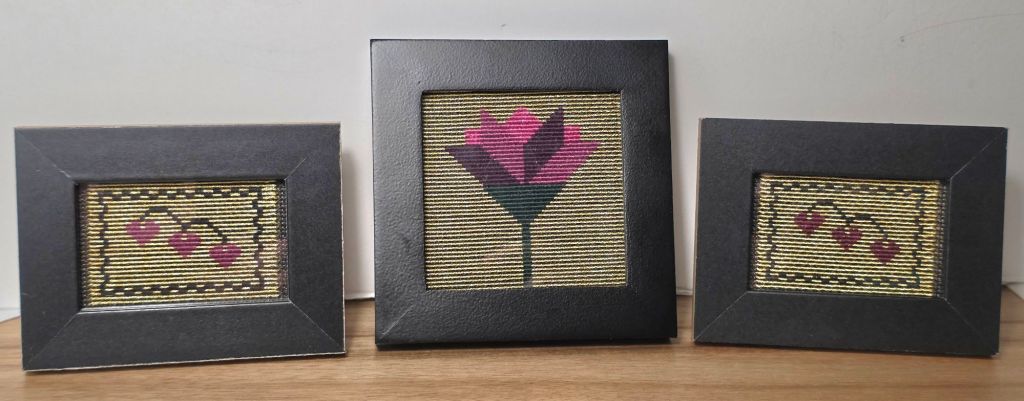
It sparkles more in person.
Filed under: Brandywine Chapter, Embroidery Guild of America, Lotus Blossom by Brenda Kocher
The challenge with this Or Nué Lotus Blossom is that lots of needles need to be working simultaneously. I don’t want to carry the gold Japanese Silk couching thread across the large center design. So, I have one one each side. There are 3 colors but the center lightest color repeats on the far left and right sides so that is 2 more needles. With the long (4.5 yards) strand of Radiance 13, that makes 8 needles to juggle. I brought my threads up in the hole of the next stitch, laid the Radiance, and then couched with the colored threads first.
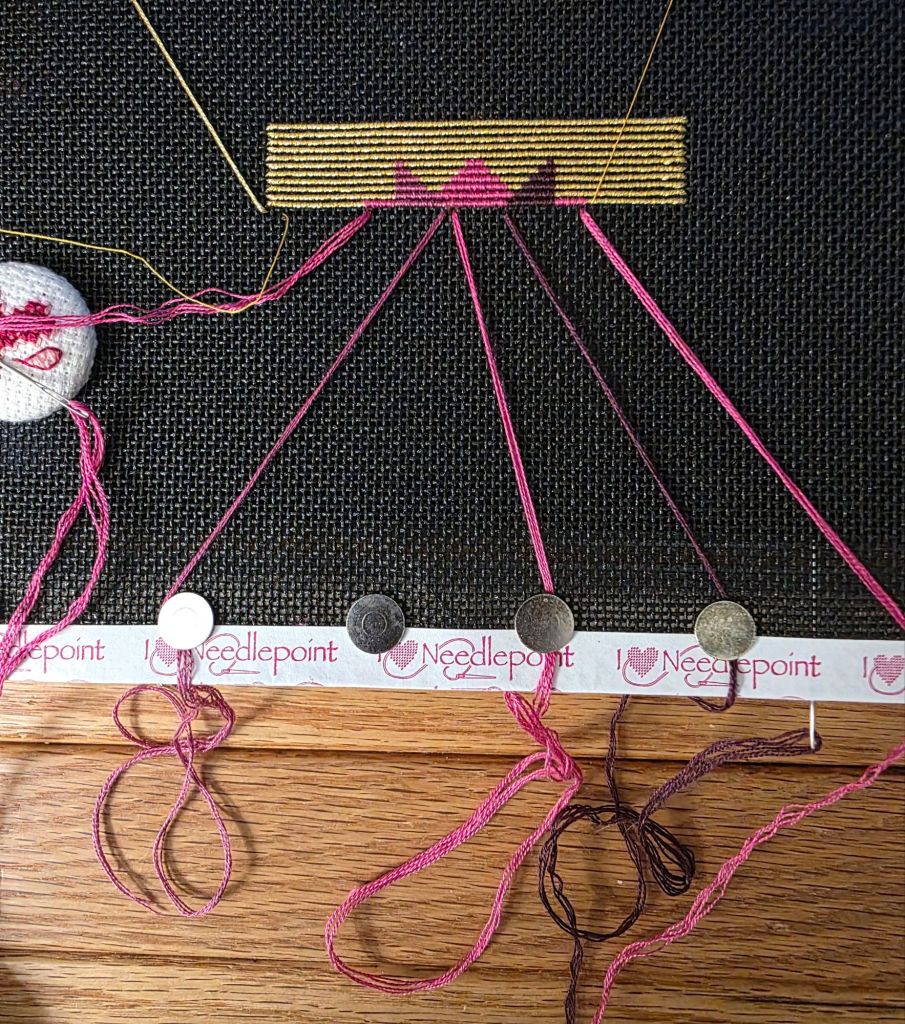
Here it is done. I’ll look for a small frame at Michael’s.